
GABA in UrinE

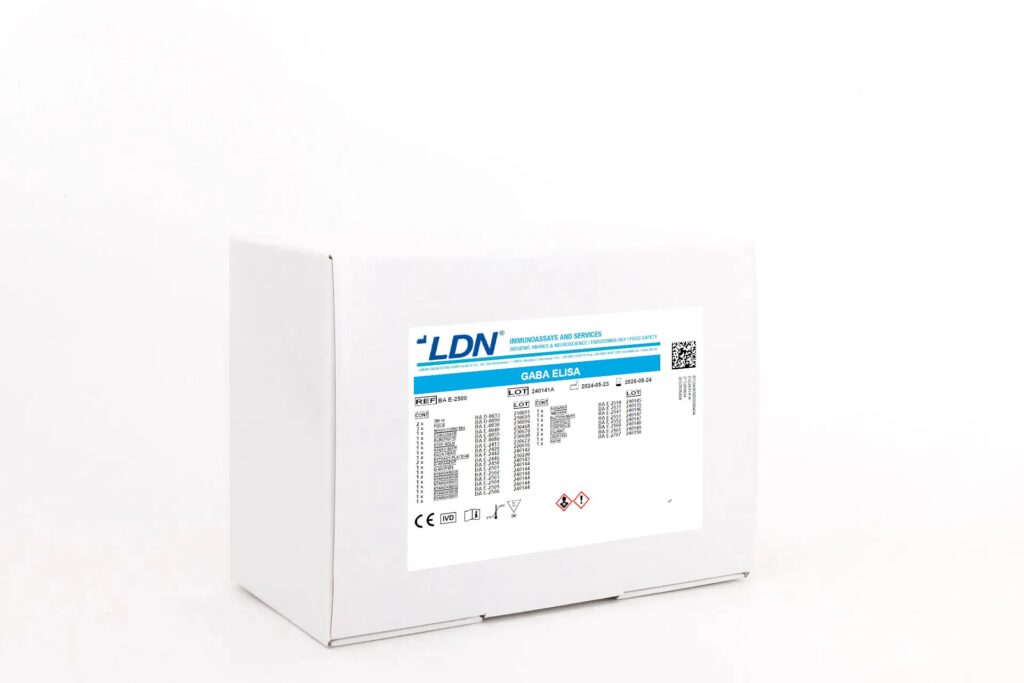
GABA (y-aminobutyric acid) is one of the most important inhibitory neurotransmitters in the central nervous system (CNS). GABA operates through interneurons by the inhibition of the release of excitatory neurotransmitters. In the CNS GABA is synthesized from L-glutamic acid which is an excitatory neurotransmitter.
Many publications postulate that determination of GABA in urine is helpful for the determination of neurostress. The collective term „neurostress” refers to many physical and psychological complaints caused due to our modern way of life, unfavorable environmental conditions, poor diet, medications, occupational and social stress, sleep deprivation, overstimulation or genetic predisposition. The resulting symptoms are burnout, depression, insomnia, chronic fatigue syndrome, fibromyalgia, multiple chemical sensitivity and other chronic pathologies.

For the determination of GABA in urine LDN offers a simple and robust competitive ELISA kit. An advanced 48 well based extraction procedure ensures high specificity and enables the GABA ELISA to be used for research applications using various biological samples as well.
Glutamate In Urine

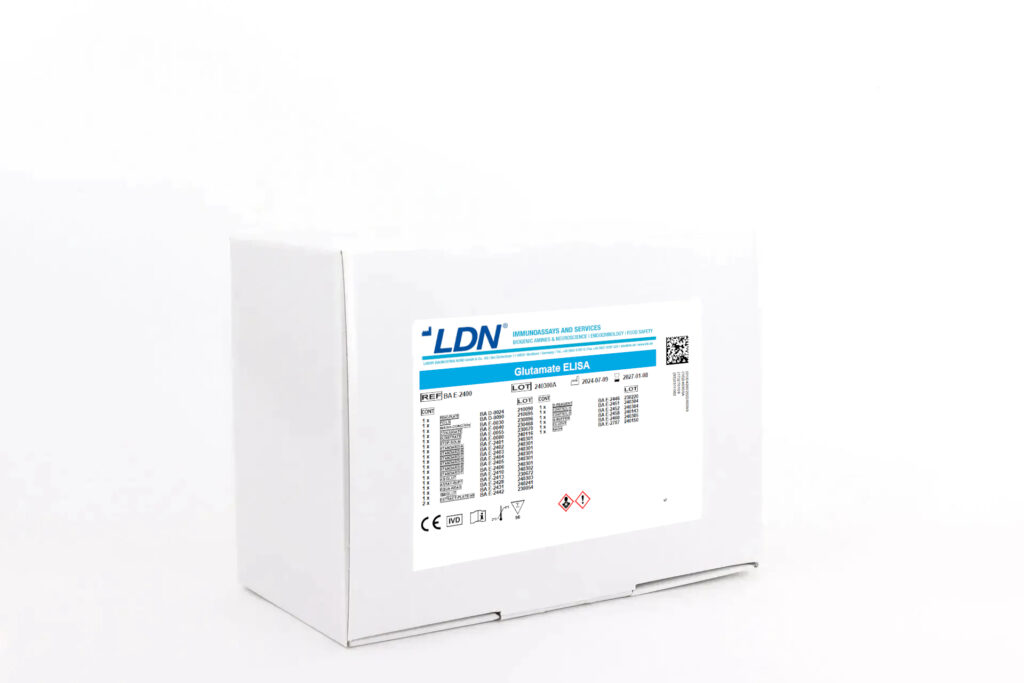
Glutamate, also known as glutamic acid, is one of the most important excitatory neurotransmitters in the central nervous system (CNS).

It is released presynaptically and it binds postsynaptically to specific receptors for glutamate. The enzyme glutamic acid decarboxylase can convert L-glutamate in the CNS by decarboxylation to v-aminobutyric acid (GABA), which acts as an inhibitory neurotransmitter.
Many publications postulate that determination of L-glutamate in urine is helpful for the determination of neurostress. The collective term „neurostress” refers to many physical and psychological complaints caused due to our modern way of life, unfavorable environmental conditions, poor diet, medications, occupational and social stress, sleep deprivation, overstimulation or genetic predisposition. The resulting symptoms are burnout, depression, insomnia, chronic fatigue syndrome, fibromyalgia, multiple chemical sensitivity and other chronic pathologies.

For the determination of L-glutamate in urine LDN offers a simple and robust competitive ELISA kit. An advanced 48 well based extraction procedure ensures high specificity and enables the Glutamate ELISA to be used for research applications using various biological samples as well.
For research applications in various biological samples please contact us.

Kynurenine in Serum and Plasma

Kynurenine is a non-proteinogenic amino acid that is produced as a metabolic intermediate during the degradation of tryptophan. The degradation of tryptophan is catalyzed by the inducible enzyme indolamine-2,3-dioxygenase (IDO). The product is kynurenine. Cytokines, in particular interferon-γ, influence the activity of the IDO, so that is why the kynurenine path is closely linked to the immune system. Kynurenine can be further converted to neuroprotective kynurenic acid, but also to neurotoxic quinolinic acid.
Disorders of the tryptophan kynurenine metabolism are associated with different disease patterns, such as stress, cancer, and depression. The latter can be treated by tryptophan administration. This requires a determination of the kynurenine to tryptophan ratio, which is a reliable marker for the IDO activity. If no increased IDO activity is detected, the administered tryptophan can serve as the starting product for serotonin synthesis.

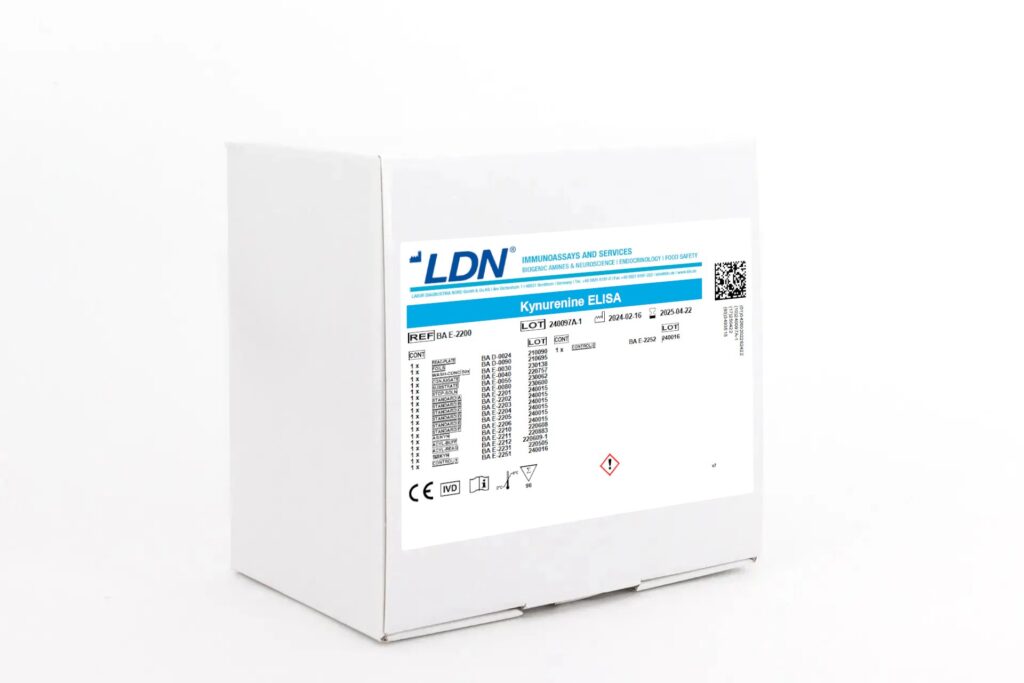
For the determination of L-Kynurenine in serum and plasma LDN offers a simple and robust competitive ELISA kit. The Kynurenine ELISA provides high specificity and an excellent correlation to a highly sophisticated XLC-MS/MS method. The assay is intended for in-vitro diagnosis but also very useful for research applications.

Tryptophan in Urine, Serum and Plasma

The amino acid L-tryptophan is essential for humans and is absorbed through the diet. Tryptophan serves as a precursor in the synthesis of the neurotransmitters serotonin and tryptamine and the epiphyseal hormone melatonin, among others. The enzyme indoleamine-2,3-dioxygenase (IDO) converts tryptophan to kynurenine. Increased IDO activity is a sign of immunological dysregulation in humans, which is often described with infections or even neurodegenerative diseases. Furthermore, tryptophan and its metabolites regulate neurobehavioral patterns and may affect well-being (depressive symptoms).

For the determination of L-Tryptophan in urine, serum and plasma LDN offers a simple and robust competitive ELISA kit. A simple protein precipitation step is part of the procedure and ensures the release of protein-bound tryptophan in serum and plasma samples. The Tryptophan ELISA provides high specificity and an excellent correlation to a highly sophisticated LC-MS/MS method. The assay is intended for in-vitro diagnosis but also very useful for research applications.