Serotonin in Urine and Serum
Serotonin (5-hydroxytryptamine) is an intermediate product of tryptophan metabolism, a well-studied neurotransmitter, and may also act as a peripheral hormone. Synthesis occurs mainly in enterochromaffin cells (ec-cells) of the gastrointestinal tract and in neurons. It is present in high concentrations in ec-cells of the intestine, serotonergic neurons of the brain, and platelets. Serotonin is mainly degraded to 5-hydroxyindole acetic acid (5-HIAA) or melatonin and can be excreted in the urine. In the bloodstream, the vast majority of serotonin is found in platelets and can be readily detected in serum. Altered serotonin levels in serum and/or urine can indicate both physical and psychological dysfunction.
Serotonin balance may be impaired in serum and/or urine in a variety of conditions. For example, decreased serotonin levels have been demonstrated in depression, anxiety, and even pain sensitivity compared to unaffected subjects. Increased serotonin levels, on the other hand, have been reported in patients with serotonin-secreting neuroendocrine tumors, also called carcinoid tumors, or hepatocellular carcinomas.
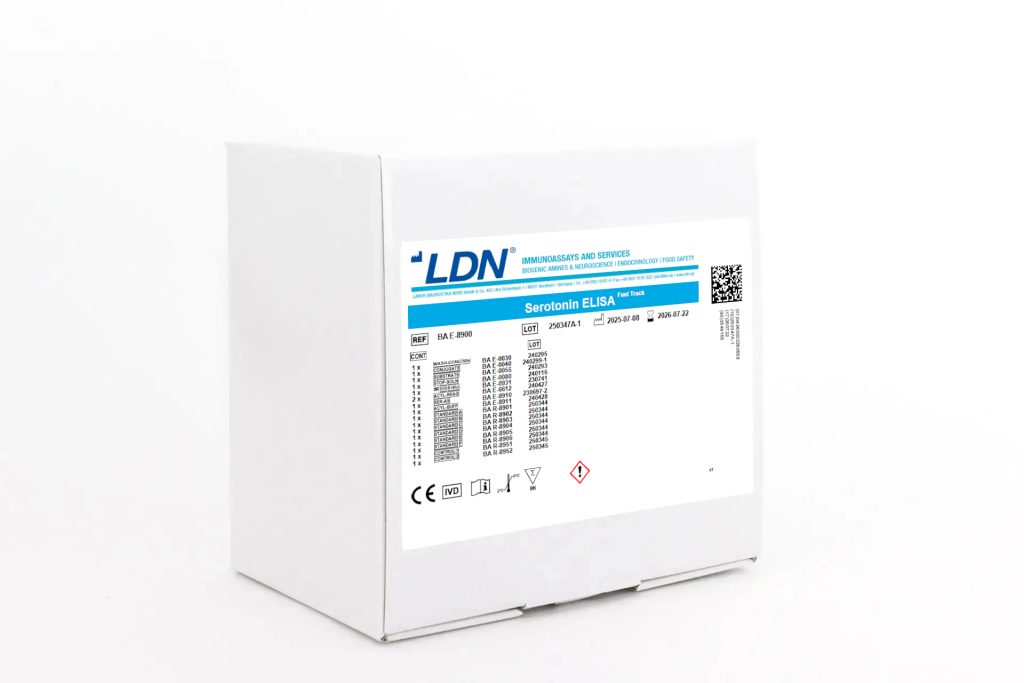
For the determination of serotonin in urine and serum LDN offers a simple and robust competitive ELISA kit. The Serotonin ELISA Fast Track provides high specificity and an excellent correlation to a highly sophisticated XLC-MS/MS method. The assay is intended for in-vitro diagnosis but also very useful for research applications.