Catecholamines in Plasma and Urine
In humans the catecholamines adrenaline (epinephrine), noradrenaline (norepinephrine) and dopamine are neurotransmitters of the sympathetic nervous system and are involved in many physiological processes. The sympathetic nervous system sets the body to a heightened state of alert, also called as the body’s fight- or-flight response. In the human body the catecholamines and their metabolites indicate the adaption of the body to acute and chronic stress. Next to the metanephrine/normetanephrine the catecholamines are important for the diagnosis and the follow-up of tumors of the sympathoadrenal system like the pheochromocytomas.
The quantitative determination of catecholamines in urine is preferred for the diagnosis of these tumors, whereas the determination of catecholamines in plasma is medically sensible for the localization of the tumor and for function testing. Values above the cut-off can provide an indication for neuroendocrine tumors. However, in literature various diseases like hypertension, cardiovascular diseases, schizophrenia and manic depression are described with abnormal low or high levels of catecholamines.
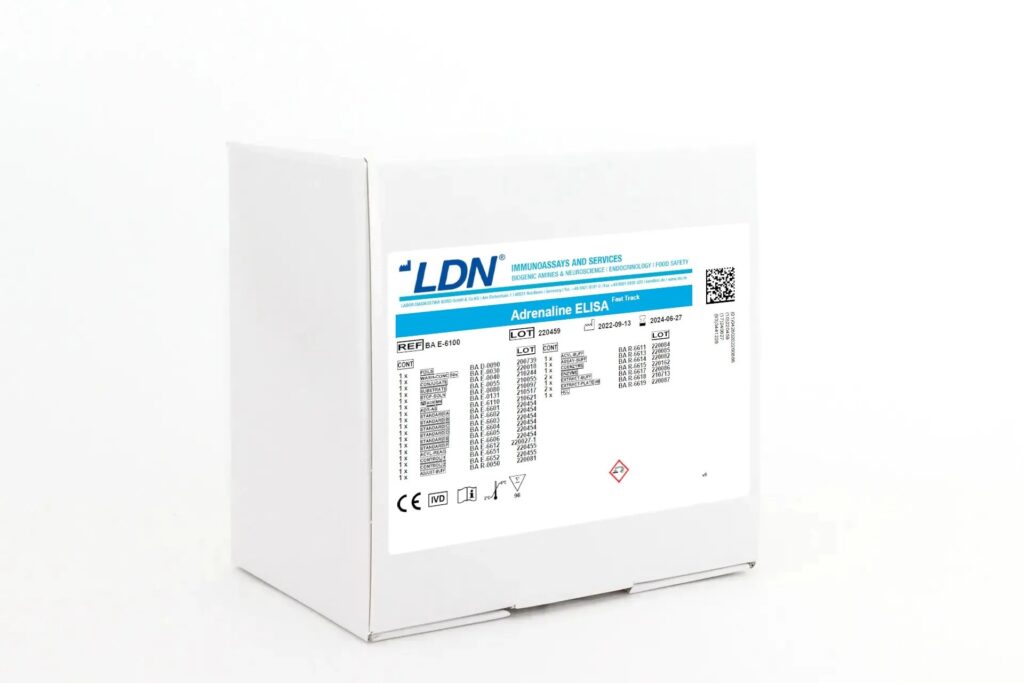
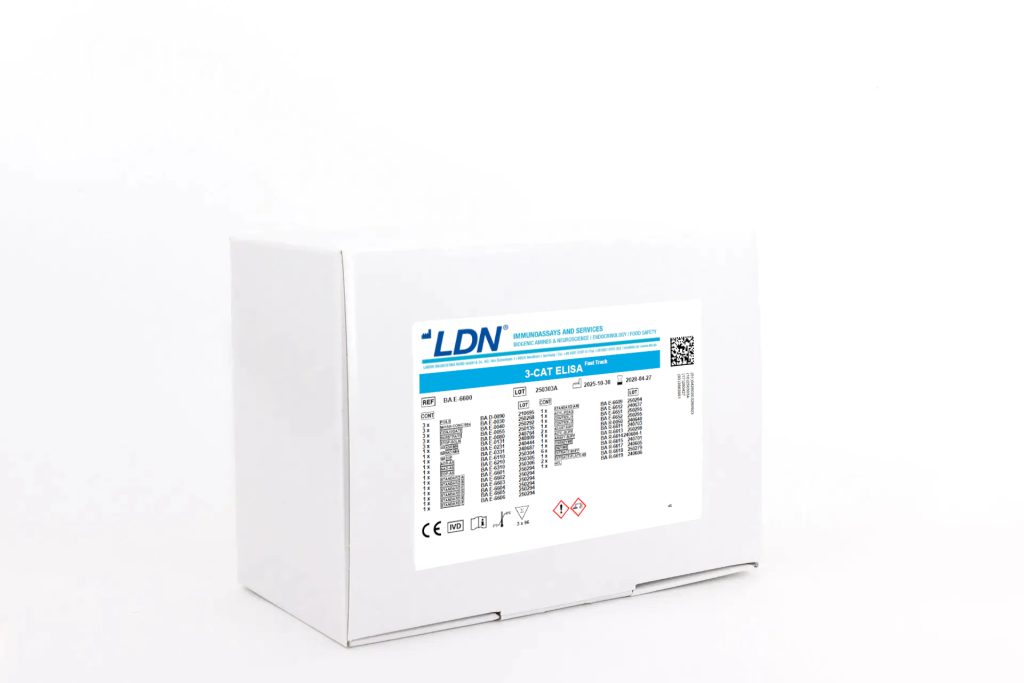
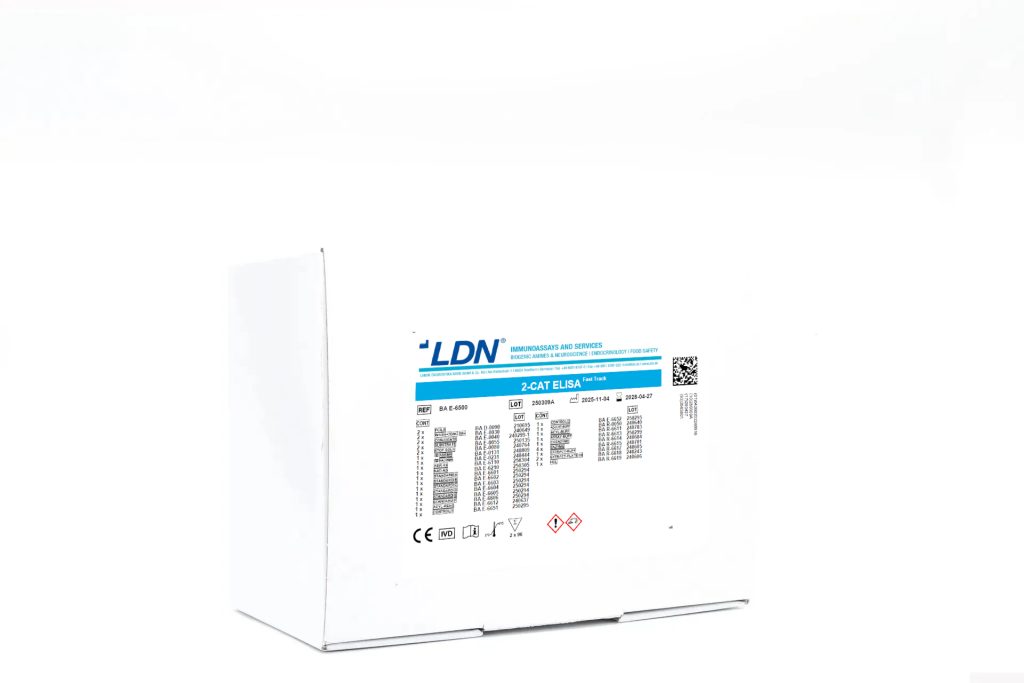
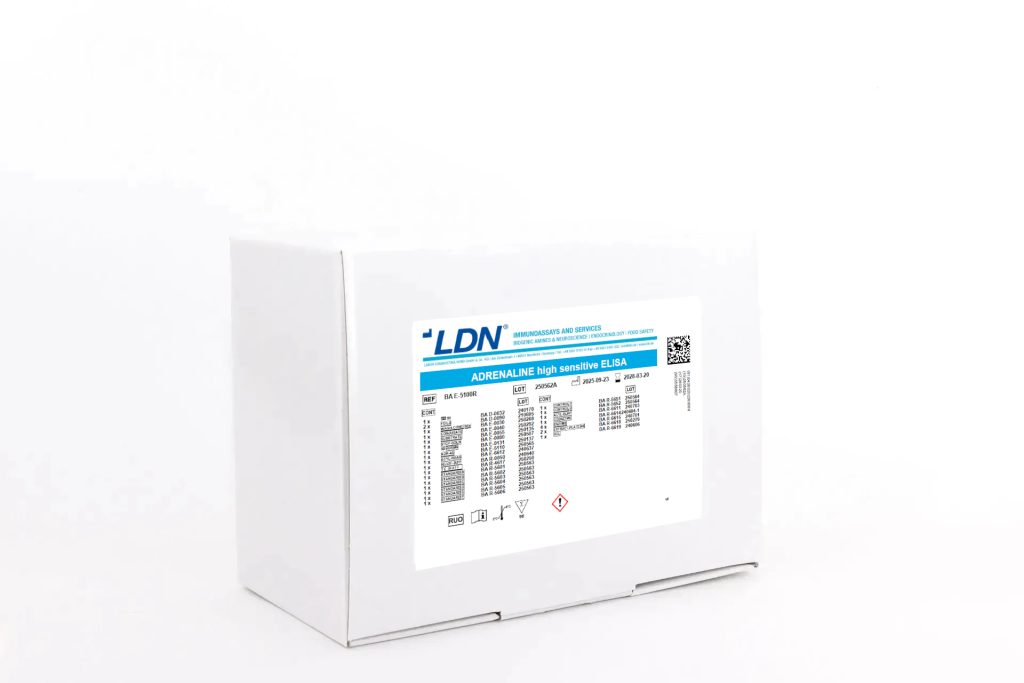
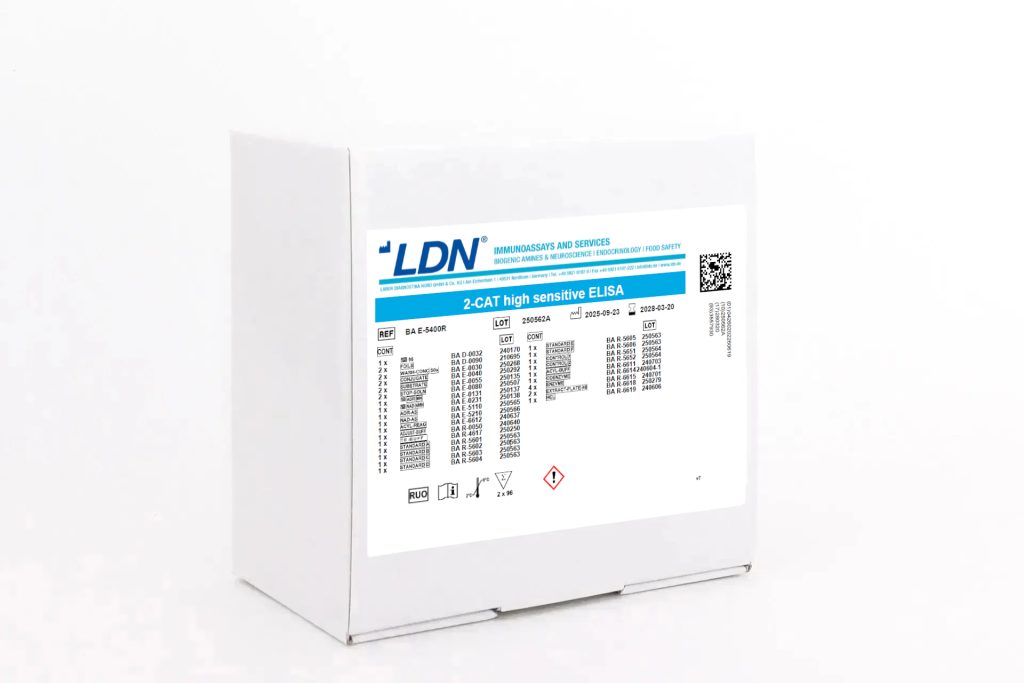
For the determination of catecholamines in plasma and urine LDN offers competitive ELISA kits for the determination of all three catecholamines, the determination of adrenaline and noradrenaline as well as for single parameter determination. An advanced 48 well based extraction procedure allows for the simultaneous determination of plasma and urine samples and ensures a high specificity.