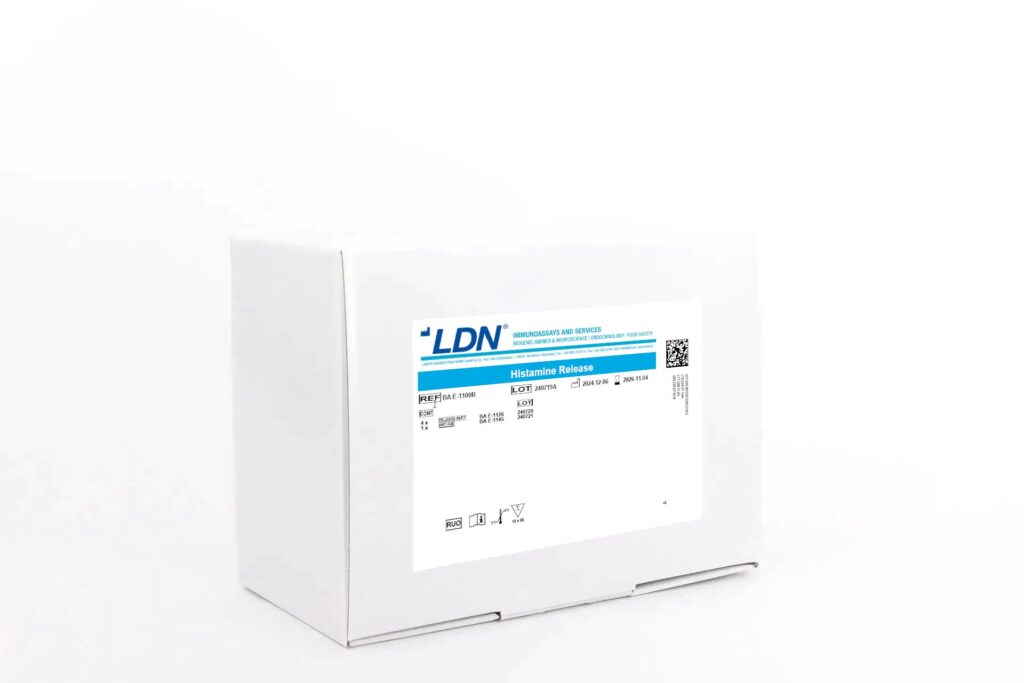
Histamine in Urine and Plasma

Histamine is a biogenic amine and neurotransmitter and is formed from the amino acid L-histidine. It is synthesized and stored in mast cells and basophils until it is released upon appropriate stimulation and finally degraded by diamine oxidase and N-methyltransferase.
Histamine is involved in many mechanisms through its release, such as immunological, physiological, and inflammatory mechanisms, as well as smooth muscle contraction, vasodilation, and increased vascular permeability. These mechanisms may result in various clinical pathologies such as diabetes, migraine, and stress, or may also affect sleep/wake states.
Histamine has been widely described as a mediator of allergic reactions, such as hay fever, skin eczema, asthma, and anaphylactic reactions. Thus, histamine testing in food intolerances or other allergic reactions can provide an indication of the severity of intolerance or allergy.

For the determination of histamine in urine and plasma LDN offers a simple and robust competitive ELISA kit. The Histamine ELISA provides high specificity and good correlation to other methods.
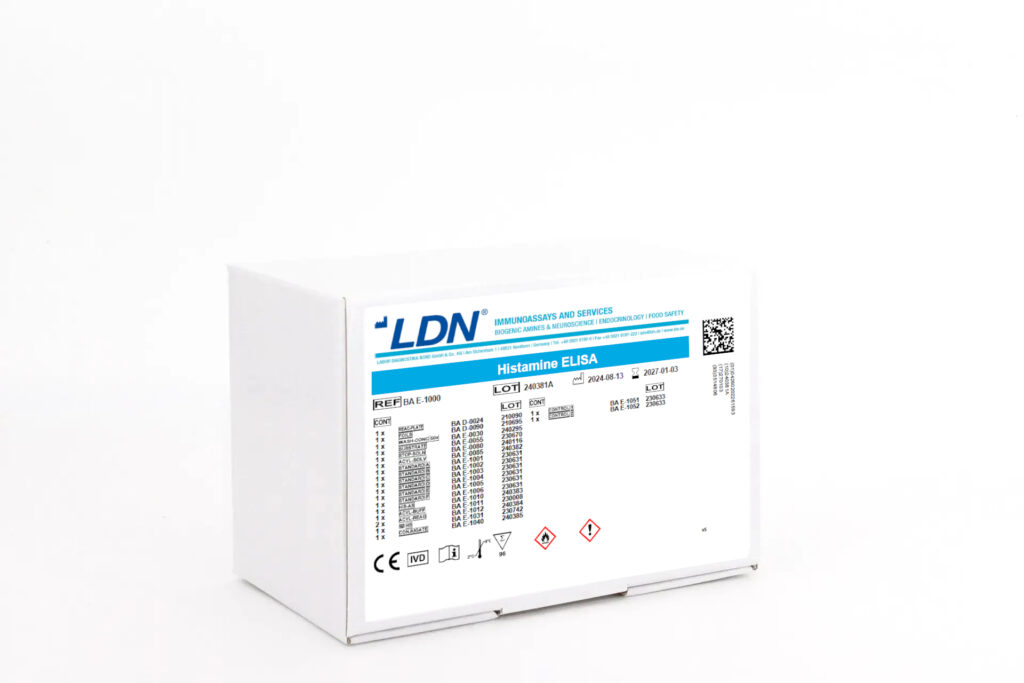
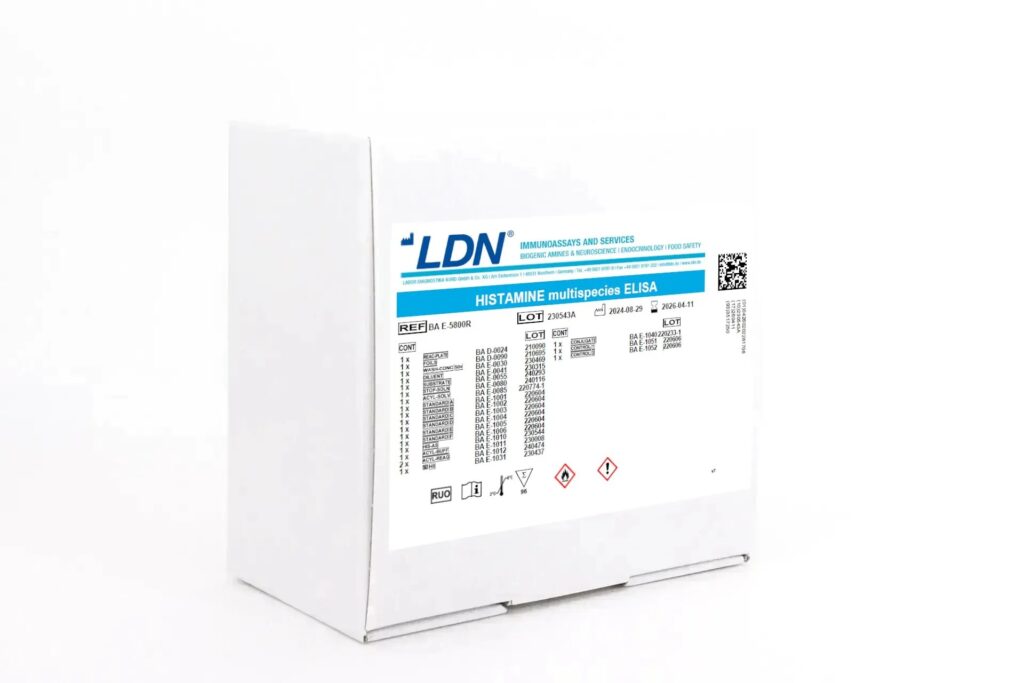
Histamine in different animal species and biological fluids

Histamine is a biogenic amine and neurotransmitter and is formed from the amino acid L-histidine. It is synthesized and stored in mast cells and basophils until it is released upon appropriate stimulation and finally degraded by diamine oxidase and N-methyltransferase.

The HISTAMINE multispecies ELISA offers a flexible protocol for the determination of Histamine in different animal species and biological fluids.

Histamine Release

In humans, histamine (ß-imidazole ethylamine) is the most important mediator and is mostly found in the initial phase of an anaphylactic reaction (“immediate type” allergy). Histamine is produced by the enzymatic decarboxylation of histidine. In the organism, histamine is present in nearly all tissues, and it is mainly stored in the metachromatic granules of mast cells and the basophilic leukocytes. It is present in an inactive bound form and is released only as required.
Histamine acts predominantly on smooth muscle and blood vessels. In humans, it is responsible for the broncho-constriction occurring during the acute phase. In the vessels, its constrictive effect is limited to the venula, whereas arterioles are dilated. Furthermore, histamine causes a contraction of the cells of the vascular endothelium and increases the vascular permeability, thereby allowing higher-molecular substances to escape into the tissue.
Like several other mediators, histamine does not exclusively mediate various clinical symptoms of anaphylaxis but also induces a series of effects which are directed towards a termination of the anaphylactic reaction. Histamine may inhibit the release of lysosomal enzymes from polymorphonuclear leukocytes, the degranulation of mast cells and basophiles and the production of complement components through mononuclear phagocytes. Furthermore, histamine can activate suppressor T cells and, thus, may inhibit the production of IgE. The biological action of histamine in tissue is guaranteed by three different surface receptors, i.e. H1, H2 and H3 receptors.

LDN offers a supplementary kit for the determination of the release of histamine from whole blood. The Histamine Release kit is for Research Use Only and quantification of the histamine release can be performed using the Histamine ELISA.